
The Death of Robin Hood (2026) Review: I Watched Hugh Jackman Bury the Legend, and It Wrecked Me
Why I Walked Into The Death of Robin Hood Expecting a Letdown
I’ll be honest about where I started. I have sat through enough “gritty reboot” trailers in my life to be permanently suspicious of the genre, and when I first heard that Michael Sarnoski — the director behind Pig and A Quiet Place: Day One — was attaching himself to a Robin Hood project starring Hugh Jackman, my first reaction was a tired sigh. We’ve already had the Russell Crowe version, the Taron Egerton version, and a small graveyard of forgettable attempts in between. My expectation walking into the theater for The Death of Robin Hood was low. What I actually watched changed my mind, and this review is my attempt to explain why, without pretending the film is flawless.
This isn’t a press-kit summary. It’s a personal account of what it felt like to sit in a dark theater and watch a director strip away every romantic notion of an outlaw hero I grew up with.
What The Death of Robin Hood Is Actually About
Forget the bow-and-arrow swagger you remember from childhood. Sarnoski’s film, written and directed by him, draws its title and tone from the centuries-old ballad “Robin Hood’s Death,” and it shows. The story drops us into 1247 England, where a grizzled, aging Robin (Hugh Jackman) is living in self-imposed exile, haunted by the killings of his outlaw years. After he’s gravely wounded in what he assumes will be his final fight, he ends up in the care of a mysterious woman at a priory. There, he forms an unexpected bond with the prioress and an orphaned girl while he wrestles with what kind of man he actually was, versus the folk hero the ballads turned him into.
There’s no Merry Men montage here. No green tights. No cheerful theft-for-the-poor heroics played for crowd-pleasing fun. This is a character study about guilt, mortality, and the gap between a legend and the person who lived it.
Hugh Jackman Plays the Most Exhausted Version of Robin Hood I’ve Ever Seen
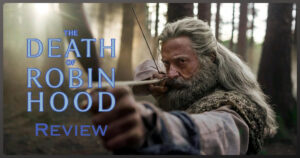
What struck me first was how physically tired Jackman lets himself look. This isn’t the chiseled, mythic outlaw of past adaptations. It’s a man whose body has clearly paid for decades of violence, and Jackman leans into weariness instead of bravado at almost every turn. Watching him in the early battle sequences, I kept thinking about how different this felt from the kind of action-hero performance audiences usually expect from him. There’s nothing glamorous about the brutality on screen, and Jackman never asks you to root for it.
Jodie Comer, playing the mysterious woman who is explicitly not a version of Maid Marian, gives the film its quieter, more reflective center. Her scenes with Jackman aren’t built around romance; they’re built around reckoning. Bill Skarsgård, taking on a reimagined Little John, brings a colder, more dangerous energy than the jovial sidekick version most of us grew up with. Noah Jupe and Murray Bartlett round out a cast that, frankly, feels overqualified for a film this many people are sleeping on.
My Honest Take on the Tone Shift
Here’s where I have to be straight with you. I loved the craft. I was less convinced by one specific choice: stripping away the “steal from the rich, give to the poor” core of the legend. That theme is the emotional spine of every Robin Hood story I grew up loving, and removing it changes what the character even represents. Some critics have pushed back on this exact point, arguing that a Robin Hood movie without that moral center risks becoming a different story wearing a familiar name. I understand that criticism, and I felt its weight at certain points in the runtime, especially in the back half when the plot leans harder into personal redemption than social justice.
That said, I don’t think the film owes us the version of Robin Hood we already have three or four times over. What Sarnoski is doing here is closer to a eulogy for a myth than a retelling of it, and once I let go of expecting the version from my childhood, the film opened up for me.
Is The Death of Robin Hood Worth Watching?
If you want a fun, colorful outlaw adventure, this is not your movie. If you’re interested in a slow-burning, visually committed character study about guilt and legacy, with a genuinely committed lead performance from Hugh Jackman, it’s worth the ticket. Critical reception has been mixed but leans positive, sitting at 67% on Rotten Tomatoes across 134 reviews with an average score of 6.3 out of 10, which roughly matches my own experience: more admiration than pure enjoyment, but admiration that stuck with me for days after.
Quick Facts: The Death of Robin Hood (2026)
- Director/Writer: Michael Sarnoski
- Studio/Distributor: A24
- Lead Cast: Hugh Jackman, Jodie Comer, Bill Skarsgård, Murray Bartlett, Noah Jupe
- Setting: 1247 England
- Filming Location: Northern Ireland (Belfast Harbour Studios, Silent Valley, Glenram, Murlough Bay)
- Premiere: Sydney Film Festival, June 12, 2026
- US Release: June 19, 2026
- Runtime: Approximately 123 minutes
- Rating: R
- Critical Reception: 67% on Rotten Tomatoes (134 reviews), average rating 6.3/10